What are Uninterruptible Power Supplies (UPS) – Installation Options?
The page discusses various types of Uninterruptible Power Supply (UPS) installations:
Single UPS Installation: This includes one UPS and its battery (internal/external), with the option of multiple strings for increased autonomy and security during utility failures. It notes that loads in maintenance bypass mode are unprotected.
Hot Standby UPS Installation: This consists of up to eight modules with a static switch, allowing for maintenance without affecting system integrity. It supports overload situations with lost redundancy.
Parallel Redundant UPS Installation – N+1: Similar to the Hot Standby setup, this installation also has multiple modules to remove one for maintenance while maintaining system integrity and supporting overload situations.
Parallel UPS Installation – Sharing the Critical Load: This setup features two or more modules to share the load, particularly useful when a single module is too large to fit. Modules must be identical and additional circuitry is needed for control.
Disaster Preventative Installation: This consists of a robust UPS backed by a diesel generator.
For installation services, users are encouraged to contact the company directly.
Single UPS installation
As the description implies, this represents a single uninterruptible power supply installation comprising of the UPS and battery. The battery can be internal or external and consist of single or multiple strings. Multiple strings can increase the autonomy and also provide greater security of load in the event of a utility mains failure.
Note: when the load has been transferred to the maintenance bypass mode, it would be unprotected in the event of a utility mains failure.

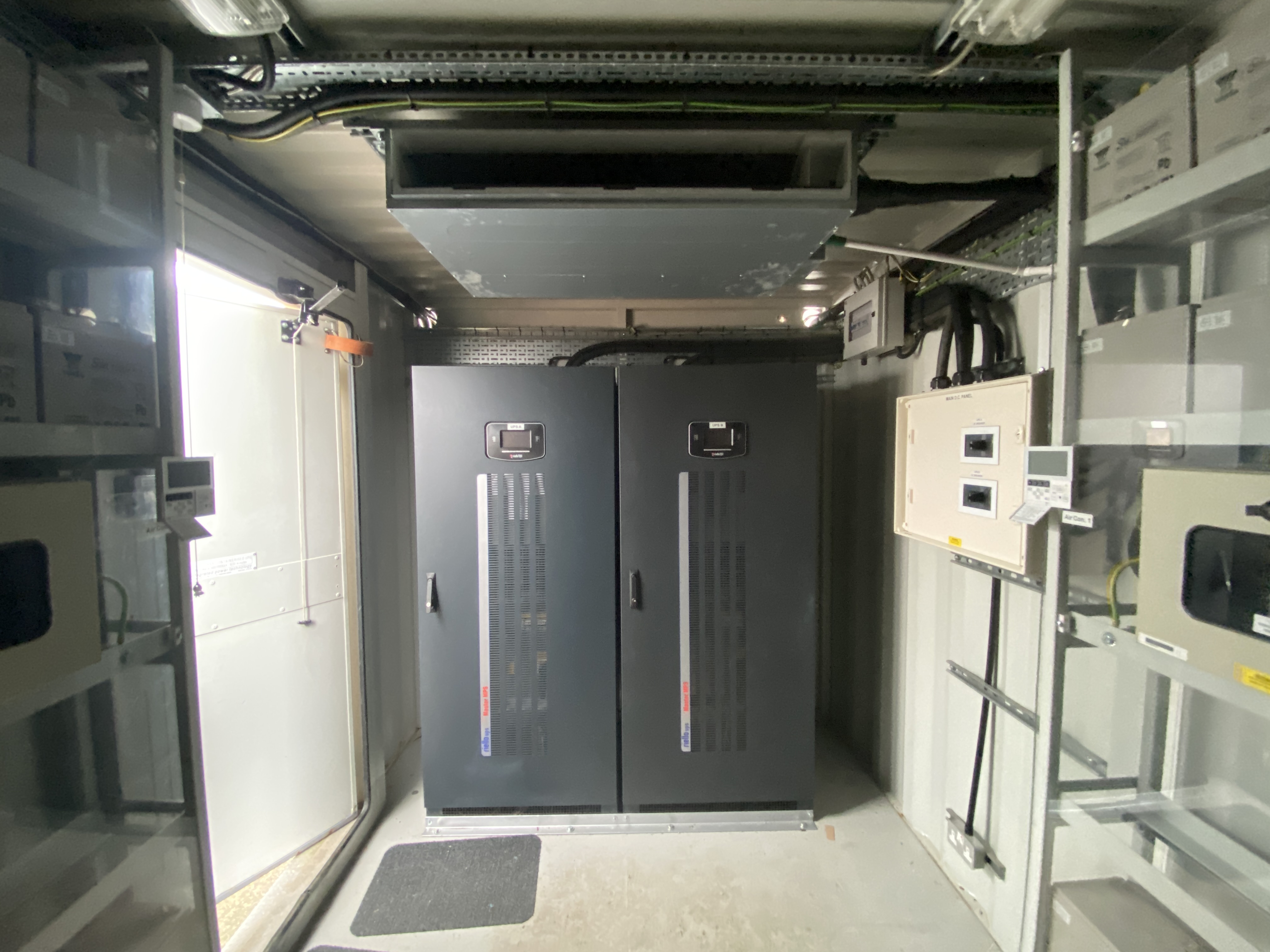
Hot Standby UPS Installation
This installation can consist of up to eight modules and can be complete with a static switch module. This type of installation is designed to ensure that when fully loaded there is sufficient capacity to remove one module from service. This is either for repair or maintenance without altering the integrity of the system. The added advantage is that the system will support an overload situation where redundancy is lost.
Parallel Redundant UPS Installation – N+1
This installation can consist of up to eight modules and can be complete with a static switch module. This type of installation is designed to ensure that when fully loaded there is sufficient capacity to remove one module from service. This is either for repair or maintenance without altering the integrity of the system. The added advantage is that the system will support an overload situation where redundancy is lost.
Parallel UPS Installation – Sharing the critical load
This installation consists of two or more, modules to support the load (normally up to a maximum of eight, depending on the UPS manufacturer) . The number of modules is designed to support the load.
A convenient method of installation where one module on its own may be too large to physically fit in the desired location. Also, as in the parallel redundant installation, providing the number of modules has not exceeded the manufacturer’s design requirements. (modules may be added as the site load increases)
It should be noted that it is not possible to parallel all types of UPS systems. The individual modules need to be the same make, module and capacity. It will require additional circuitry to provide the parallel control.
Disaster Preventative installation
This usually consists of a substantial UPS system backed by a diesel generator.