What are Double Fed Induction Generators (DFIG)?
Double Fed Induction Generators (DFIG) are vital in wind turbines for electricity generation, allowing energy production even at lower rotational speeds. DFIGs differ from traditional generators, as they utilize both rotor and stator windings connected to a grid via a power converter, enabling variable rotor speeds based on wind conditions. This feature enhances energy collection and efficiency in low wind scenarios. DFIGs provide benefits like reduced inverter costs, minimized EMI filter ratings, improved system efficiency (2-3% increase), and effective power-factor control, contributing to grid stability and cost savings.
DFIG, short for Double Fed Induction Generators, find significant application in wind turbines for electricity production. Unlike conventional generator alternators that generate electricity at a constant rotation speed of 1500 RPM, the wind, as a power source, is inherently less reliable. The use of DFIGs contributes to the maximisation of energy production, even at lower rotational speeds.
In wind turbines, DFIGs operate using an induction generator principle. Unlike static windings typically found in conventional generators, DFIGs have both rotor and stator windings. The rotor winding is connected to the grid through a power converter system, which allows the rotor speed to vary according to the wind conditions.
The unique design of DFIGs enables them to capture and convert wind energy efficiently. When wind speed increases, the increased torque causes the rotor and stator windings to rotate at different speeds. This speed difference induces a voltage in the rotor winding, which is then converted to electrical power through the power converter system. The generated electrical power is fed into the electrical grid.
One of the significant advantages of DFIGs is their capability to generate electricity at much lower rotational speeds compared to traditional generator alternators. This allows wind turbines to harness energy even during periods of low wind speeds. The ability of DFIGs to adapt to varying wind conditions enhances the overall energy production efficiency of wind turbines.
Moreover, DFIGs offer additional benefits such as reactive power control and improved grid stability. The power converter system connected to the rotor winding allows for precise control of reactive power generation. This capability helps stabilise the grid and ensure a continuous and consistent supply of electricity.
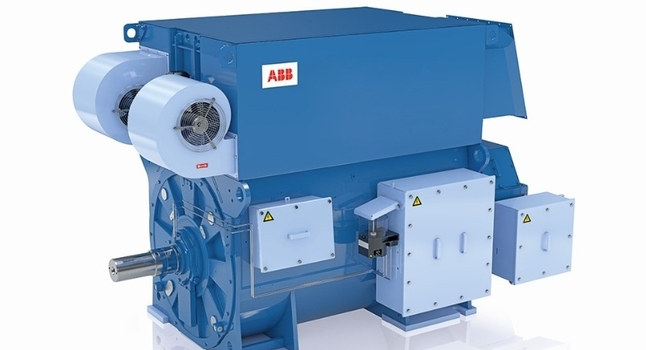 Advantages of using DFIG
The utilisation of DFIG, which stands for Double Fed Induction Generators, offers several advantages in power systems. These advantages include reduced inverter cost, reduced cost of inverter and EMI filters, improved system efficiency, and simplified power-factor control implementation.
One of the primary advantages of using DFIG is the reduced cost of the inverter. In traditional generator systems, the inverter rating is typically 25% of the total system power. However, since the speed range of the Asynchronous Slip-ring Generator (ASG) used in DFIG is around ±33% of the synchronous speed, the inverter rating can be significantly reduced. This reduction in inverter size results in cost savings.
Additionally, the cost of inverter and EMI (Electromagnetic Interference) filters can be minimised with DFIG systems. In traditional systems, these filters are typically rated for 0.25 per unit (p.u.) of total system power. However, due to the DFIG's improved harmonic characteristics, inverter harmonics represent a smaller fraction of the total system harmonics. As a result, the rating of these filters can be reduced, leading to cost reductions.
Another notable advantage of DFIG is improved system efficiency. Approximately 2-3% improvement in efficiency can be obtained compared to traditional generator systems. This increase in efficiency is attributed to the operation of the DFIG system, which incorporates a four-quadrant converter and an induction machine. In DFIG, the converter only needs to provide excitation energy, resulting in reduced losses and higher overall efficiency.
DFIG systems facilitate the implementation of power-factor control at lower costs. Operating similarly to synchronous generators, the DFIG system allows for efficient control of the power factor. With the DFIG's ability to adjust the rotor/stator speed difference, power-factor control can be easily achieved, contributing to better system stability and reduced costs associated with power-factor correction.