Uninterruptible Power Supply (UPS) Batteries – How Long Do They Last?
Batteries are crucial for short-term power storage in UPS systems, focusing on both the design life and operational support duration during utility failures. The main type discussed is the VRLA (Valve Regulated Lead Acid) battery, which consists of multiple cells forming a battery block. Battery blocks typically come in 6V or 12V configurations and should not be discharged below 1.63V to avoid damage, with a maximum safe discharge of 1.75V for prolonged use. Battery autonomy refers to how long the battery can support a load, while capacity is measured in Ampere Hours (Ah). Fully discharging a battery reduces its effectiveness, and most are designed for about 100 full discharge cycles. Design life generally spans 3-5 or 7-10 years, with real replacement expectations being shorter at around 3.5–4 years for 5-year batteries and 7.5–8 years for 10-year batteries. The guide emphasizes that the design life should not be taken as the actual lifespan.
Batteries are the main short term power storage of most UPS systems. “How long do they last?” is a leading question, as it can refer to either:
- the design life of the battery, or
- how long the battery can support the protected equipment.
Equally both are in the case of a utility mains failure.
First, let’s define the battery. In this instance we are talking about a VRLA (Valve Regulated Lead Acid) battery.
Multiple Battery Cells
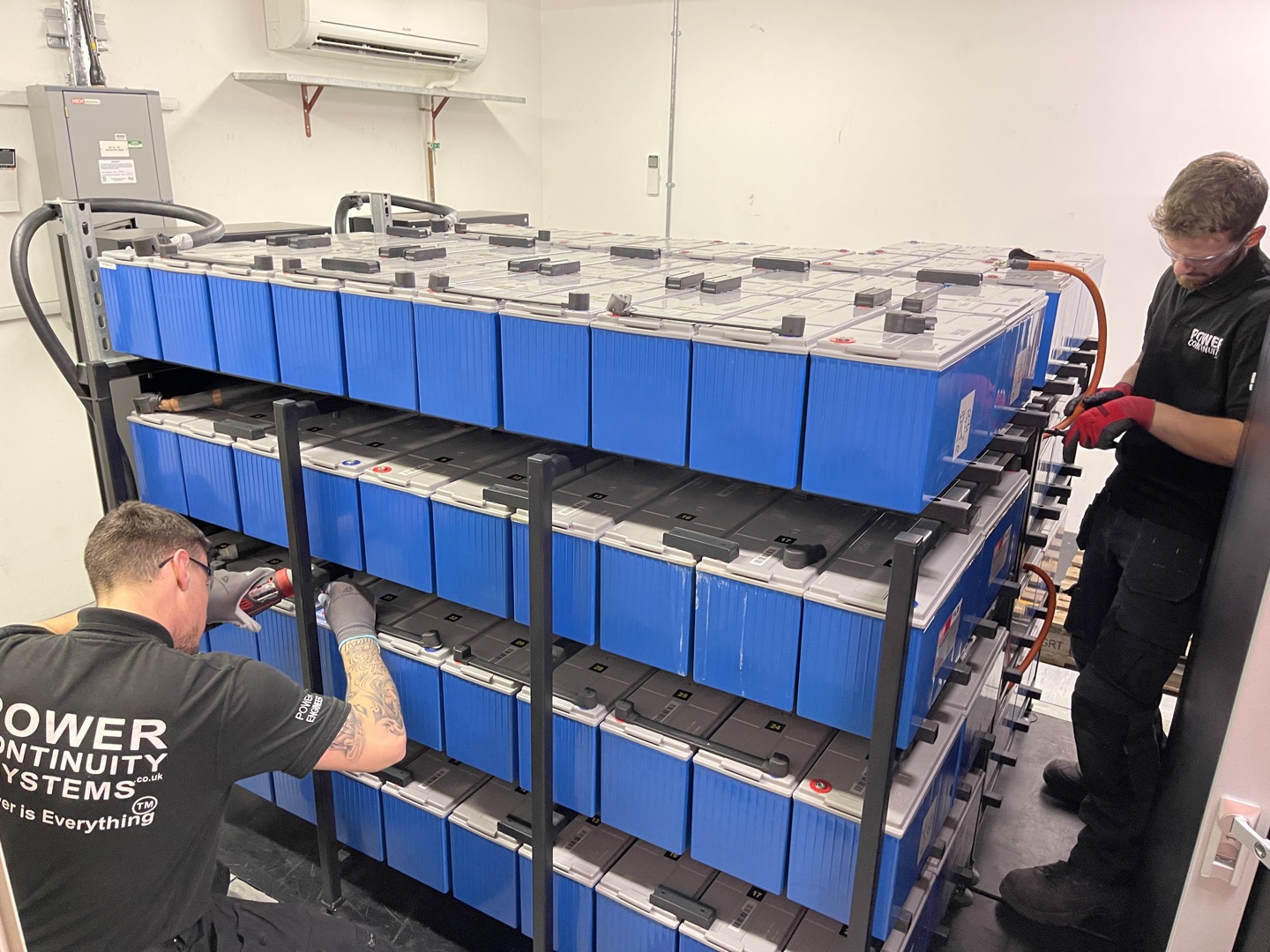
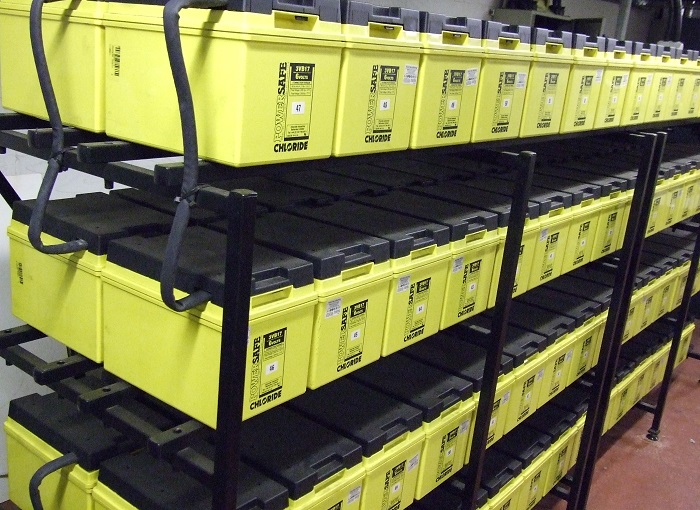
In the case of a UPS or emergency lighting unit the term battery relates to the complete battery string, which can consist of multiple battery cells. A collection of cells housed in an individual container is termed a battery block, or just block. The most common battery blocks consist of either 3 or 6 cells, and as each cell has a voltage of between 2 and 2.25 volts, depending upon its state of charge, we consequently have the 6V and 12V battery block.
The battery block can be safely discharged to a value of 1.63V per cell- depending upon the time it is expected to supply current for. Discharging the battery block means it will not suffer damage when recharged. If it is required to continue to supply current for a long period of time, it is not wise to discharge the battery block beyond 1.75V per cell. This is to avoid damaging the battery block and reducing its operational life. This can be in the case of an emergency lighting unit which needs to supply its load for either 1 or 3 hours.
Battery Autonomy and Capacity
Battery autonomy: defined as how long will the battery support the load for. Capacity of a battery: measured by Ampere Hour (Ah). This is the total number of Amperes (measure of current) that the battery can supply for one hour, at which point the cell voltage will be between 1.63 and 1.85V, depending upon the application. Therefore, a 100Ah battery will discharge at 100A for 1 hour.
However, there is a sting in the tail. If a battery is fully discharged, its capacity to supply the rated current is diminished. Typically, a battery block is designed to supply 100 full discharge cycles. In the case of a UPS or emergency lighting application this very rarely happens during the designed operating life of the battery.
The battery design-life defined: the period of time until the battery can only deliver 80% of its rated capacity. This is typically 3 – 5 or 7 – 10 years.
Expect to replace 5-year design-life batteries after 3.5 – 4 years.
Expect to replace 10-year design-life batteries after 7.5 – 8 years.
NOTE: Never expect the design-life of a battery to be the ‘REAL’ life of a battery.