Standby Power Solutions – Why and When?
Standby Power Solutions are vital for ensuring a continuous and reliable power supply in situations where utility mains are unreliable or critical loads must remain supported without interruption. Typically involving a generator and manual changeover switch, these systems can automatically activate in the event of a power failure, providing ready support for essential operations like servers, air conditioning, and lighting.
More complex systems integrate UPS Power Solutions and automated mains failure panels for seamless operation during outages, capable of sustaining power for periods ranging from 8 to 10 hours, with options for extended fuel storage for longer outages.
Standby power systems are crucial for businesses and facilities such as hospitals and data centers that rely on uninterrupted power to safeguard operations and lives, particularly during severe weather conditions or disasters that disrupt utility service. Overall, these solutions bridge the gap between power loss and restoration, preventing detrimental impacts from outages.
Why Standby Power Solutions are important
Standby Power Solutions are required when the utility mains supply is unreliable. Also where the load is critical and has to be supported without any failure.
The UPS Power Solution provide an uninterrupted supply for a finite time. The Standby Power Solution operates in conjunction with the UPS Power Solution. Ensuring that a supply is continuously and seamlessly available irrespective of the utility mains supply.
Standby Power Solutions in their basic form will consist of a single generator, usually a diesel generator and a manual changeover switch.
When Standby Power Solutions are important
In the event of a utility mains failure, the generator can manually start. By the action of the changeover switch, its output can be applied to the load while isolating any feedback from the utility mains supply connection.
More complex forms of Standby Power Solutions will consist of the UPS Power Solution together with the provision of a generator installation. Controlled by a fully automatic mains failure panel. The automatic mains failure panel will sense the loss of the utility mains supply, start the generator and automatically connect the output of the generator to the load. Typically, as a stand-alone system the generator is capable of supplying the load for 8 – 10 hours using its internal fuel tank. Requiring additional fuel storage and transfer pumping systems. Necessary to provide longer periods of support.
Continual Operations with Standby Power
Standby Power will not just support the essential load, servers and associated networks. Also the complete infrastructure to ensure the smooth operation of the load.
This larger load will normally consist of the air conditioning modules and lighting. Without the air conditioning being available the server room will very quickly fail due to overheating. Overheating of the comms room is a common point of failure.
More sophisticated Standby Power Solutions can also consist of a mobile suite of equipment including both UPS Power Solutions: UPS N+1 and Generators N+1.
Standby Power Solutions can also be as simple as a stand-alone generator.
This is the case where a building is in an isolated location and constant availability of power is essential, such as for a nursing home. Uninterruptible power is not required. A standby source of power is essential. This is to supply heat and light for the duration of the outage.
Rural settings often experience lengthy power cuts. Power supported by diesel generators.
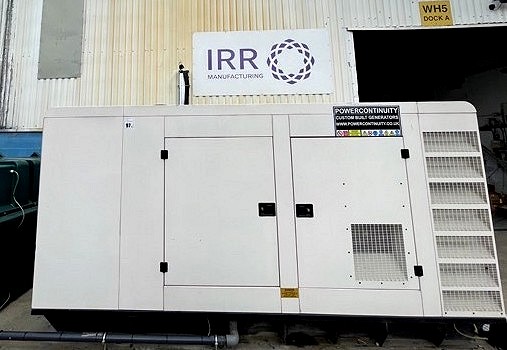
Standby Power Solutions are essential for supporting critical and essential loads, particularly in situations where any loss of power would be completely unacceptable to the operational status of a business or could potentially jeopardise lives. These solutions become crucial for businesses and organisations that rely heavily on consistent and uninterrupted power supply to maintain their operations and ensure the safety of individuals.
In cases of severe storm damage or other natural disasters, it may take several days for utility mains supply to be fully restored. During this time, standby power systems are indispensable in providing reliable and continuous electricity to essential facilities such as hospitals, emergency services, data centres, and other critical infrastructure. These power solutions act as a backup to bridge the gap between the loss of utility power and its eventual restoration.
The importance of Standby Power Solutions becomes evident in scenarios where power outages can have severe consequences. For instance, in healthcare settings, power failure can jeopardise the lives of patients dependent on medical devices and life-support equipment. Similarly, in industries where the disruption of power could lead to significant financial losses, standby power systems are critical for maintaining continuous operations and avoiding expensive downtime.
Standby Power Solutions often consist of generators or battery backup systems that automatically activate when the main power supply fails. These systems are designed to seamlessly and instantaneously switch over to the backup power source, ensuring a smooth transition without any interruption to the critical loads.