How to Define Noise Levels in Diesel Generators
This content discusses the measurement of sound intensity using decibels (dB), specifically focusing on dBA levels of generators. dBA measures noise levels from generators, typically ranging from 70-90 dB(A) at 1 meter, depending on the generator type. Noise levels are calculated in free field conditions, with common standards being around 80 dB(A) for enclosed generators. Safe noise levels are between 65dB and 70dB, with permissible exposure in industrial settings being up to 80dB over an 8-hour workday. Recognizing the risks of excessive noise, the US established noise limits through the Occupational Safety and Health Act. The content also explains that sound pressure is measured in dB and psi, with critical considerations for distance affecting sound levels.
dBA Sound Level for Generators – What is it
A decibel (dB) is a unit that is used to measure the intensity of the sound. A decibel is equal to a tenth of a bel (B), and this unit is used to measure the range of the human hearing.
A dBA is the term to calculate noise levels of the generators. That encompasses all sounds emanating from a working diesel generator. Generally silent generators range from 70-90 dB(A) at 1m but this will depend on the kind of build of the generator and the purpose the generator was built for.
How to Define Noise Levels
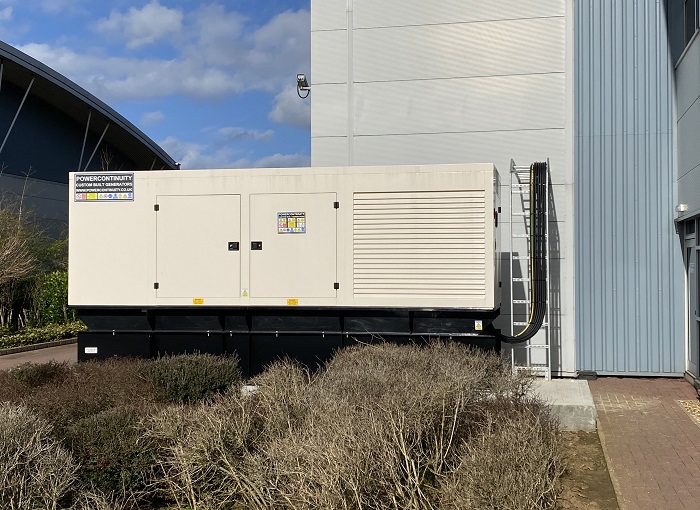
Diesel Generator noise levels calculated in dB(A) in free field conditions. ‘Free field conditions’ mean the generator noise levels tested in the open, without surrounding buildings. The common standard for canopied or acoustically enclosed generators is approximately 80dB(A) @1 metre in free field conditions. The next most common is 75dB(A)@ 1 metre in free field conditions. Any lower dB(A) increases the costs. Moreover, consider the position of the generator when calculating the noise and of course include the costs. It is important to understand that even without the presence of a generator ambient background in the UK is mostly 65 dB(A).
Super Silent 1000kVA Generator from Power Continuity Ltd on Vimeo

Playing in picture-in-picture
Play
Picture-in-Picture
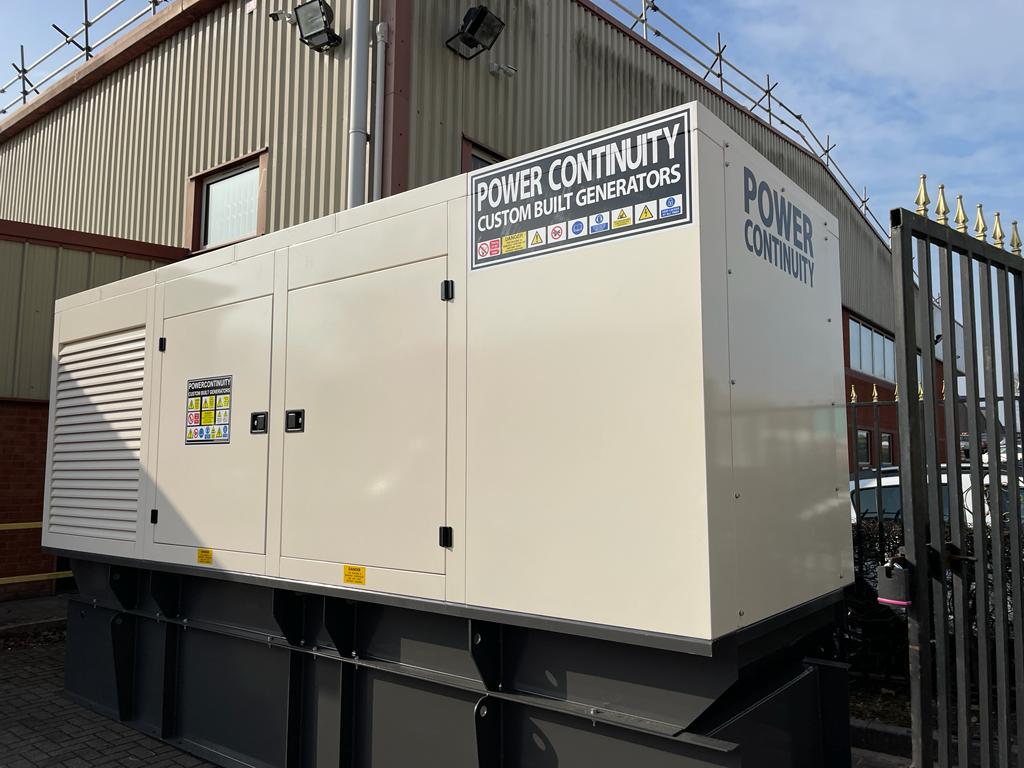
Example of a Powercontinuity super silent generator running:
Explanation:
Noise defined as unwanted sound.
Not to mention, exposure to excessive noise levels may cause permanent hearing damage, adversely affecting working efficiency and comfort.
Recognising this, the US Government created the Occupational Safety and Health Act which established noise limits for industrial environments.
So the question would be, what is an appropriate and safe noise level? While around 65dB and 70dB is considered to be safe as it is the noise that it is reproduced on a normal conversation, the Control of Noise at Work Regulations 2005 state that an employee can be exposed to a noise up to 80dB per 8 hours work day in an industrial environment.
Employee’s daily noise dose – formula:
D(8) = (first dose) C1/T1 + (second dose) C2/T2 + etc.
Where Cn is the duration of exposure at a specified sound level and Tn is total time of exposure permitted at a specified sound level. In the same fashion noise dose is considered to be acceptable when the daily dose is equal to, or less than 1.
Uniquely sound pressure is measured in decibels (dB) and pounds per square inch (psi). However, consider the frequency of noise when measuring loudness of sound. dB(A) accepted world-wide as Sound measurements weighted to the human ear.
Therefore, for noises of practical interest, the difference in sound power levels are not large. Knowing that doubling the sound pressure will result in only a 6 dB increase is also helpful.
The following charts will aid in predicting overall engine room noise. These levels are anechoic (free) field measurements which do not account for the effect of surrounding machines, floor, walls, etc. Nevertheless, effect of distance on sound is straightforward. Doubling the distance will decrease the apparent sound by 6dB; halving the distance from the source will increase the apparent sound by 6dB.