Generator Overheating – Identify Causes and Prevent in the Future
To address generator overheating, assess the environment and perform ten key checks. First, inspect air intakes and outputs for obstructions like debris and ensure no objects are within 2 meters. Verify oil and coolant levels, replace air and oil filters if old or clogged, and use approved oil. Check for exhaust damage and hose leaks, and ensure the generator isn't overloaded. Consider the operating environment; extreme temperatures and airborne debris can impact performance. For indoor setups, ensure proper ventilation and airflow around the generator. Regular servicing and maintenance are crucial to prevent overheating.
How to identify the main causes of generator overheating
Is the generator still overheating after working through all ten checks AND rectifying any issues? If so, the next step is to take a look at the generator’s environment.
1- Check for leaves or debris blocking the air intakes and outputs.
2- Objects placed within 2 metres of the air intakes or outputs will block or restrict the airflow. Move anything recently placed in this area.
3- Check that the oil is at the correct level and not running low.
4- Check that water coolant levels are correct. Has the generator lost or even run out of coolant
5- Have you changed the air filters recently? Blocked-up or old filters will cause the generator to overheat and cut out.
6- Have you changed the oil filters recently? Clogged or old filters will cause the generator to overheat and cut out.
7- Have you used cheap, non-brand oil or non-compliant oil? This will cause the engine to over-exert itself and overheat.
8- Has anyone damaged or tampered with the exhaust? Restricted exhaust will cause the generator to overheat and cut out.
9- Do you see any damage to or weeping from the flexible hoses on the generator engine or fuel supplies? Check and replace/tighten weeping hoses and loose supporting clips where necessary.
10- Have you overloaded the generator beyond its load capacity? Is an imbalanced, irregular load being intermittently dropped onto the generator? Either of these will cause the generator to overheat and stop.

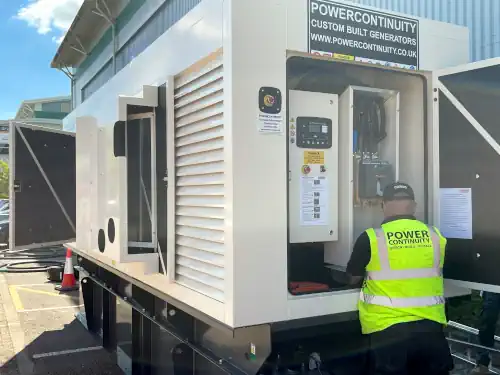
Environment
Generators have specific operating temperature ranges; extreme heat or cold can significantly degrade performance, cause overheating, and shorten component lifespan, risking your backup power. Environmental factors are also critical given the presence of fuel.
To ensure equipment safety, critical planning is essential. At Power Continuity, our engineers evaluate your site to identify potential downsides before providing custom-built solutions tailored to your specific environment. We examine every perimeter to ensure your equipment remains sound and ready when you need it most.
Outside Environment:
How to stop outdoor generators from overheating.
Does the outside temperature regularly rise above 40°C? Is there an issue with airborne debris, dust, leaves or sand? Has there been any recent flooding that could have damaged the generator? If outside temperatures are very high, shield the generator from direct sunlight. To avoid problems with airborne debris, fit additional filters/nets to the air intakes and output vents. Clear these daily to prevent the generator from overheating and cutting out. To prevent water damage from flooding, a raised hard-standing area should be provided for siting the generator on.
Internal Building Environment:
How to stop indoor generators from overheating
Is there an issue with restricted airflow in the generator area? Can you see other equipment emitting high levels of heat close to the generator? What about the generator location – is it in an enclosed area, without ventilation? Or do you maybe feel that there’s no need for ventilation because the generator is in a large space? Even in an underground car park or similar area, ventilation is still required. This will ensure that the circulating air temperature does not keep increasing, thus causing the generator to cut out due to overheated incoming airflow.
To avoid this problem, regularly check that there is permanent, unblocked airflow to ventilate the area. You may need to install ventilationo n either side of the area e.g. vents in back and front walls to allow free flow of air 24/7.
Take, for example, a scenario where an external vehicle car park entrance must be open during the day to provide airflow when the generator is running. The provision would need to be made for times when the car park entrance is closed outside of the working day AND the generator is running.
Note: Hot air from the generator output should have a means of escape to the outside, otherwise it will cause the generator to overheat and cut out. Hot air must never be allowed to build up in the room. Check that damage or a bird’s nest has not blocked the exhaust exit point.
How to prevent generator overheating- Quick Prevention
Service your generator regularly by the manufacturer’s requirements. Never miss a service. Air intakes and outputs should always be clear and unrestricted. Keep oil and water coolant levels topped up to the correct levels. Regularly clean the exhaust of any debris. Finally, check with, the manufacturer.
This video shows what a generator should look and sound like when running with no overheating issues.
If you’re looking to Service your Diesel Generator, call us on 0845 055 8455, we’re here to help!