Generator Harmonic Issues in Diesel Generators
Harmonic distortion in Diesel Generators significantly impacts performance, increasing output voltage distortion and rms currents, leading to overheating and reduced power factor. This can diminish load capacity and voltage regulation, with Total Harmonic Distortion of Voltage (THDU) ideally kept below 5%. Addressing these issues requires upstream identification of distortion sources, implementation of harmonic filters, and regular monitoring. The harmonic sub-transient reactance (X"d) typically ranges from 10-12%, indicating generators are more sensitive to harmonics than transformers. Oversizing the generator can mitigate these effects, especially in systems supporting UPS, requiring a 2:1 power ratio (e.g., a 500kVA UPS needs a 1000kVA Diesel Generator). Regular analysis and monitoring can alleviate risks and enhance performance.
Generator Harmonic issues explained
Harmonic distortion poses a significant challenge to the regulation and performance of Diesel Generators. This distortion, which increases the root mean square (rms) value of the output voltage, stems from deviations from a pure sinusoidal waveform. The high time constant associated with flux variations in the windings further complicates the precise correction of these distortions.
The presence of harmonics not only affects voltage regulation but also has adverse effects on the generator windings. Since harmonics can increase the rms current, excessive temperature rises occur in the generator windings. Amplification of these harmonics can lead to several consequences, including increased voltage distortion (Total Harmonic Distortion of Voltage, or THDU) on the upstream busbars during Diesel Generator power operation. An acceptable limit for THDU is generally set at 5%. Additionally, harmonics contribute to a reduction in the input power factor, which can fall below the desired level of 0.8. This, in turn, decreases the load capacity of the generator.
To address harmonic distortion effectively, it is imperative to identify and eliminate the root cause of the distortion upstream from the generator. By locating and removing the source of harmonic distortions earlier in the electrical system, the impact on the Diesel Generator can be mitigated. Implementing harmonic filters or active power filters at the source of the distortion can aid in reducing the harmonic content and ensuring smoother generator operation.
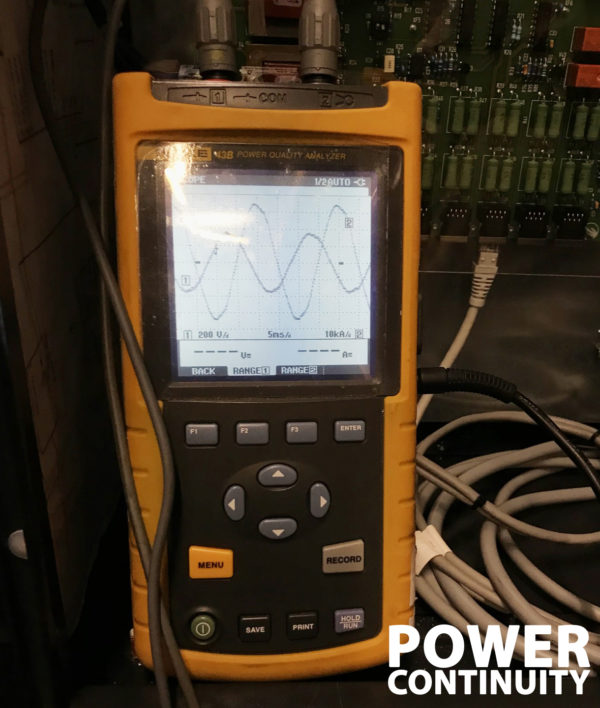
Furthermore, regular harmonics monitoring and analysis can help detect any deviations from acceptable limits and allow for proactive measures to be taken. By employing harmonic analysis tools and conducting periodic assessments, potential issues can be identified in advance, reducing the risk of damages to the generator and improving overall performance.
Overall, addressing harmonic distortion in Diesel Generator systems requires a multi-faceted approach. It involves locating and removing the source of distortion upstream, implementing harmonic filters or active power filters, and conducting regular monitoring and analysis. By effectively managing harmonic distortion, the generator's voltage regulation, temperature rise, and overall performance can be improved, ensuring reliable and efficient operation.
Harmonic sub-transient reactance
The harmonic sub-transient reactance, denoted as X"d, is an important parameter for generators, typically ranging from 10 to 12%. This value is significantly higher compared to the short-circuit voltage of a transformer, which usually falls around 3 to 4%. Essentially, this means that the output impedance of a Diesel Generator is 2 to 4 times greater than that of a transformer.
Harmonics, represented by sinusoidal currents that are integer multiples (k) of the fundamental frequency, are amplified in a generator. This amplification is notably higher when compared to normal operation on utility power, specifically regarding the output impedance of a transformer.
This disparity in impedance levels has several implications for generator performance. Firstly, the higher sub-transient reactance of a generator results in a greater capacity to handle large sudden loads. However, it also means that the generator is more sensitive to harmonics and may experience challenges in voltage regulation and stability.
The amplification of harmonics in the generator's output impedance can lead to various issues. These include increased voltage distortion, potential overheating of components due to harmonic currents, and difficulties in maintaining a stable output voltage under harmonic-rich conditions. The higher output impedance effectively exacerbates the impact of harmonics on the generator.
It is worth noting that harmonics can be introduced to the generator's electrical system through various sources such as non-linear loads or power electronic devices. To manage harmonics effectively, additional measures may be required. These can include the installation of harmonic filters or active power filters to mitigate the effects of harmonic currents and reduce their impact on the generator.
How to cure Harmonic issues with Diesel Generators?
First Option is to Oversize the Diesel Generator.
A classic solution to avoid the effects of harmonics is to oversize the Diesel Generator. This increase in power makes it possible to handle the temperature rise in coils, to ensure correct regulation and to obtain a higher output impedance. Should the Genset be supporting a UPS power system, then the power rating of the diesel generator must be 2 times greater than that of the UPS. (eg: 2:1 ratio) 500kVA UPS will require a 1000kVA Diesel Generator Power source.
If you’ve got Diesel Generator Harmonic Issues, call us on 0845 055 8455, we’re here to help!